
How the Kuala Lumpur International PR Conference confronted PR in an AI-driven world
By Adrian Cropley OAM, FRSA, FCSCE, IABC Fellow, SCMP is a Board Member of the Global Alliance for Public Relations and Communication Management
“KLIP 8 reminded me, more than ever, that humans and humanity count when AI amplifies communication in today’s world.”
— Adrian Cropley OAM
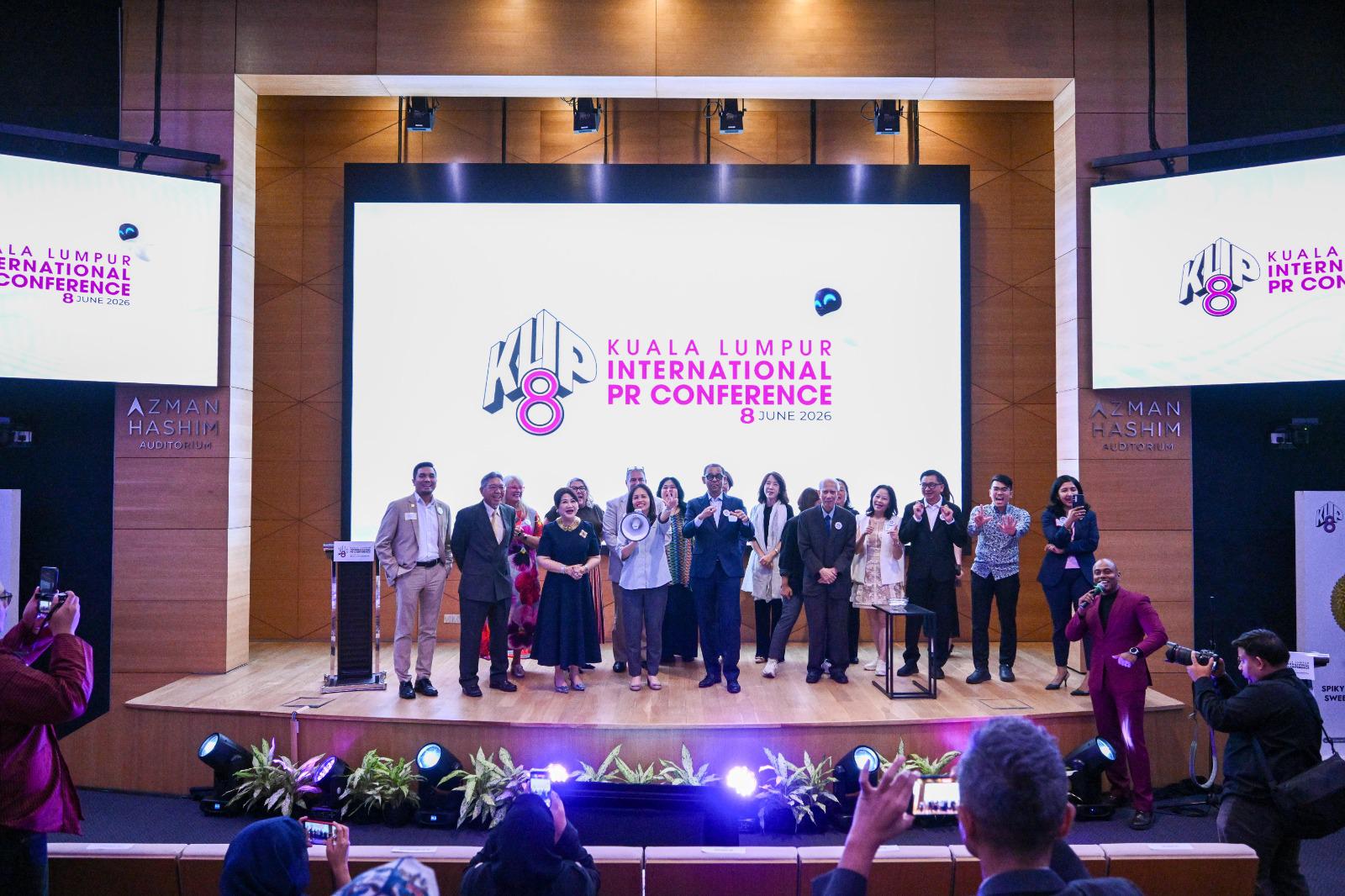
KLIP 8 — “Zero Hour” — at the Azman Hashim Auditorium: the stage set for a hard conversation about trust in an AI-driven world.
There is a question hanging over our profession. In a world where a machine can draft your media release, clone your CEO’s voice, and flood your channels with content that looks real but isn’t — what is left that is uniquely ours? Boy, that is the question the eighth Kuala Lumpur International PR Conference set out to confront. Jaffri Amin, MD, World Communications, and Director and Chair of the Asia Pacific Region for the Global Alliance for Public Relations and Communication Management, and his team called it Zero Hour, and they built the whole event around a single, uncomfortable idea: The Trust Crisis — PR in an AI-driven world.
Let’s face it, that is not marketing hyperbole. Trust is the currency our profession trades in, and right now the exchange rate is moving against us. To its great credit, KLIP 8 didn’t dwell on the buzzwords lining the conference wall — fake news, misinformation, scam, sentiment, reputation. It went looking for what it actually takes to hold the line. Here is what unfolded over the day.
A conference that earns its place
First, a word about the event itself. Jaffri Amin Osman and his team at World Communications, together with the Institute of Public Relations Malaysia, have built KLIP into something the region genuinely looks forward to. Since 2019 it has become the go-to strategic communication conference in this part of the world, and KLIP 8 showed exactly why. This year’s gathering brought leaders onto one stage from right across the region and beyond — Malaysia, Indonesia, the Philippines, Singapore, Thailand, Vietnam, Hong Kong, China, Korea, New Zealand and Australia — anchored by a ministerial keynote and a program that refused to settle for easy answers. I’ve been to a lot of conferences over a lot of years, and I can tell you the difference between an event that fills a room and one that moves a profession. KLIP delivers the second kind. Jaffri curates, convenes, and creates the conditions for the conversations that matter. That is no small craft, and our profession is better for it.
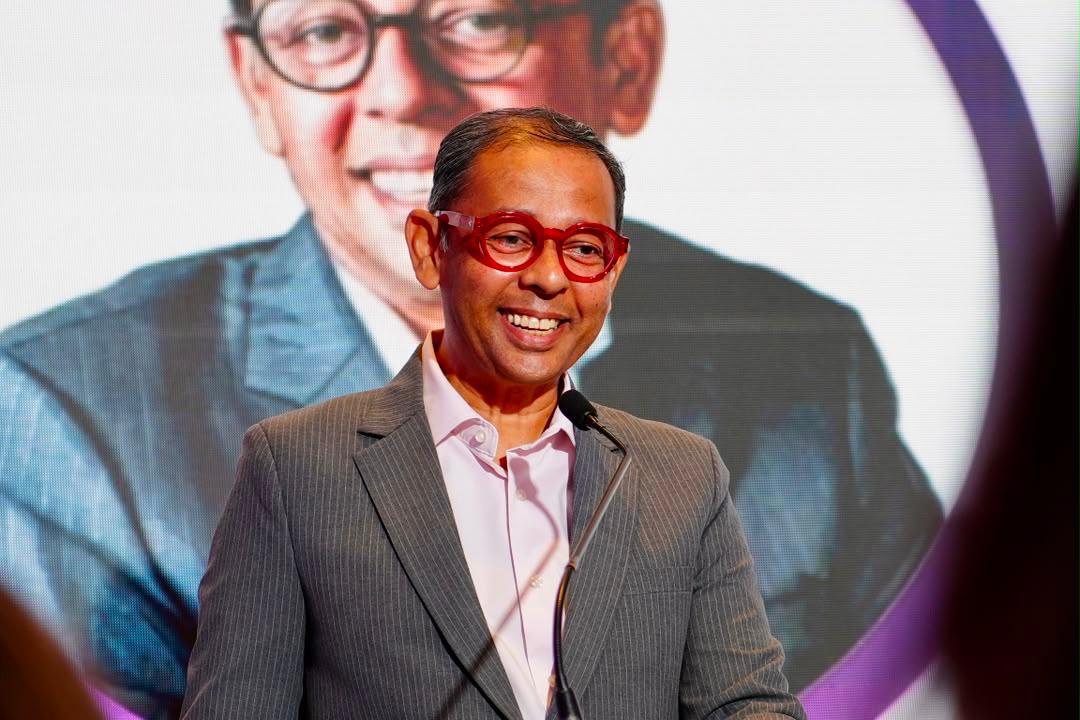
Jaffri Amin opening KLIP 8 — the convenor who, year after year, creates the conditions for the conversations our profession needs to have.
The trust crisis, in real terms
What does “the trust crisis” actually mean once you strip away the slogan? It means audiences can no longer assume that what they see is true, and that puts every one of us on the back foot. The KLIP 8 keynote and official launch was delivered on behalf of YB Teo Nie Ching, Deputy Minister of Communications, on the theme of raising digital citizens, not digital casualties — a reminder that misinformation, disinformation and fake news are not abstract industry problems. They land on real people, and especially on the young.
The threads connected across borders. Jennifer Muir, who spoke earlier about the global eyes now on Australia over its under-16 social media ban, and what it means to communicate a contentious policy responsibly. Hearing that alongside Malaysia’s own youth-protection agenda made the lesson plain: this is no longer one country’s debate. Mediha Mahmood then made the case that silence itself is now a signal — that in a chaotic digital space, what we choose not to say carries as much weight as what we do. And across the crisis-leadership panel, the message was consistent: in the age of digital chaos, you lead, you don’t react.
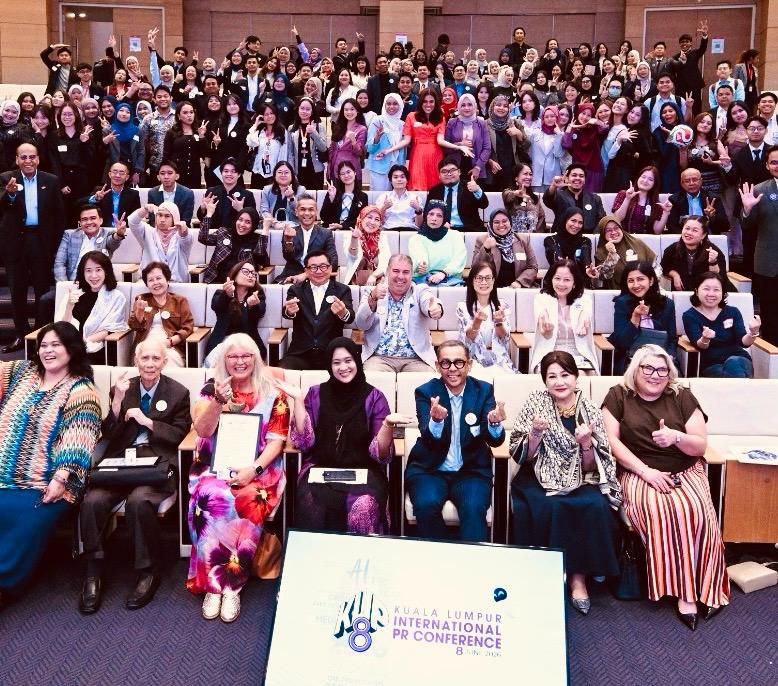
A full house at the Azman Hashim Auditorium — the region’s communication profession in one room. Your network really is your net worth.
What stayed with me most from the morning was a single, urgent theme: we need far greater recognition of the role safety must play in the online space. Let’s face it, we are living in a world where synthetic content increasingly rules, and the rules in society simply aren’t changing fast enough to keep pace. That gap matters most for the people least able to protect themselves — and it matters most of all for our children. When the means to deceive move faster than the safeguards meant to protect, closing that gap becomes our responsibility, not someone else’s.
The thread that tied it all together: responsibility
If I had to name the single idea that ran through every session, it would be this: responsibility. Responsible communication, and — the phrase of the day — responsible AI. Karen Yap took us beyond the script, evaluating executive readiness against a gold-standard crisis framework, with AI as the assistant rather than the author.
This is exactly the work the Global Alliance has been driving, and it is why I wear that hat with some pride. In May 2025, in Venice, member organisations across the world co-signed the Venice Pledge for Responsible AI — a commitment to the Global Alliance’s Responsible AI Guiding Principles. It is not a policy you file away. It is a promise: that AI should support, not replace, human judgement and creativity; that we lead with transparency, fairness and human oversight; that accuracy, accountability and attribution are non-negotiable. Here is the part I love. The Institute of Public Relations Malaysia — the very body hosting KLIP — is a signatory, alongside the Centre for Strategic Communication Excellence and more than twenty other associations and member organisations. So the principles weren’t hovering over the room as theory. They were baked into the host’s own commitment.
If you haven’t read the principles, or signed the pledge yourself, I’d encourage you to start at globalalliancepr.org. This is the standard our profession is choosing to hold itself to, and standards only mean something when enough of us live by them.
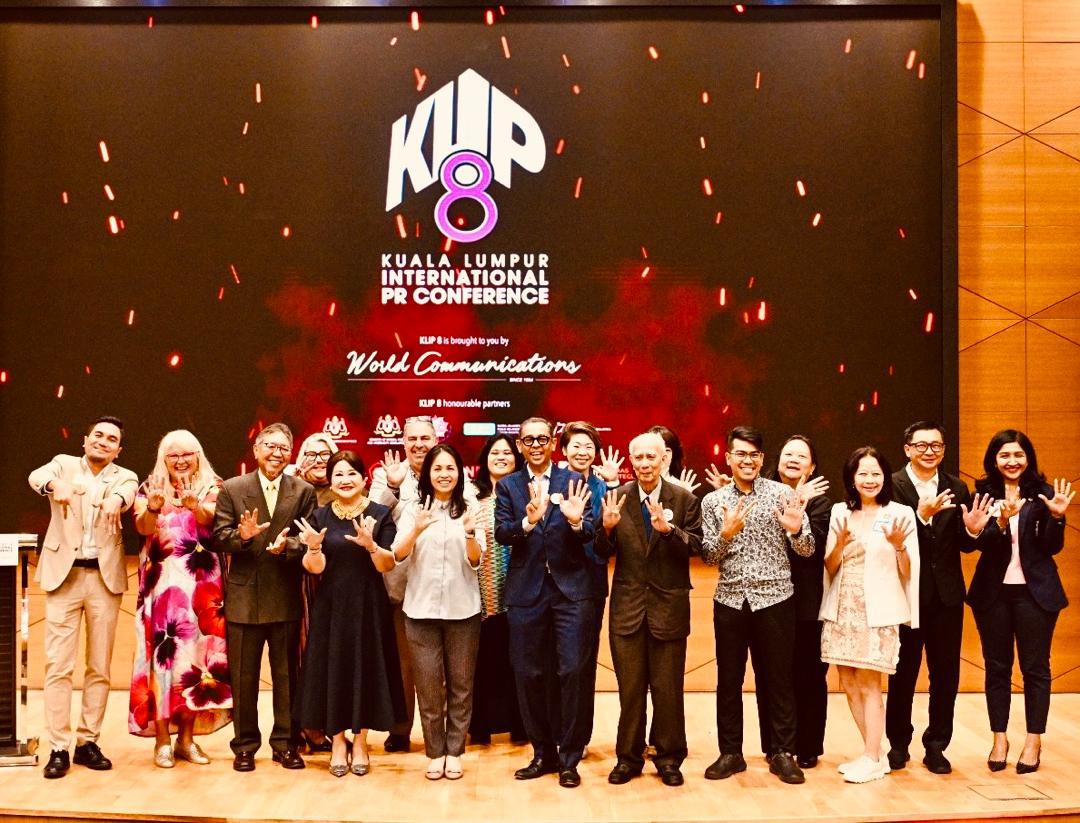
The KLIP 8 line-up on one stage — a global profession in the room. Standards like the Venice Pledge only mean something when enough of us choose to live by them.
From intangible to impact
The program gave me two slots of my own, both in a packed morning — one making the case that AI-powered strategic communication only matters if it turns the intangible (influence, trust, storytelling) into something measurable a business leader can actually see, and one facilitating a panel on what happens when social media meets artificial intelligence. The Deputy Minister had spoken just before that panel, so youth protection and online harm were still hanging in the air as we got into it. But I’ll resist recounting my own lines, because the real story of KLIP 8 was the sheer range of what the rest of the stage delivered.
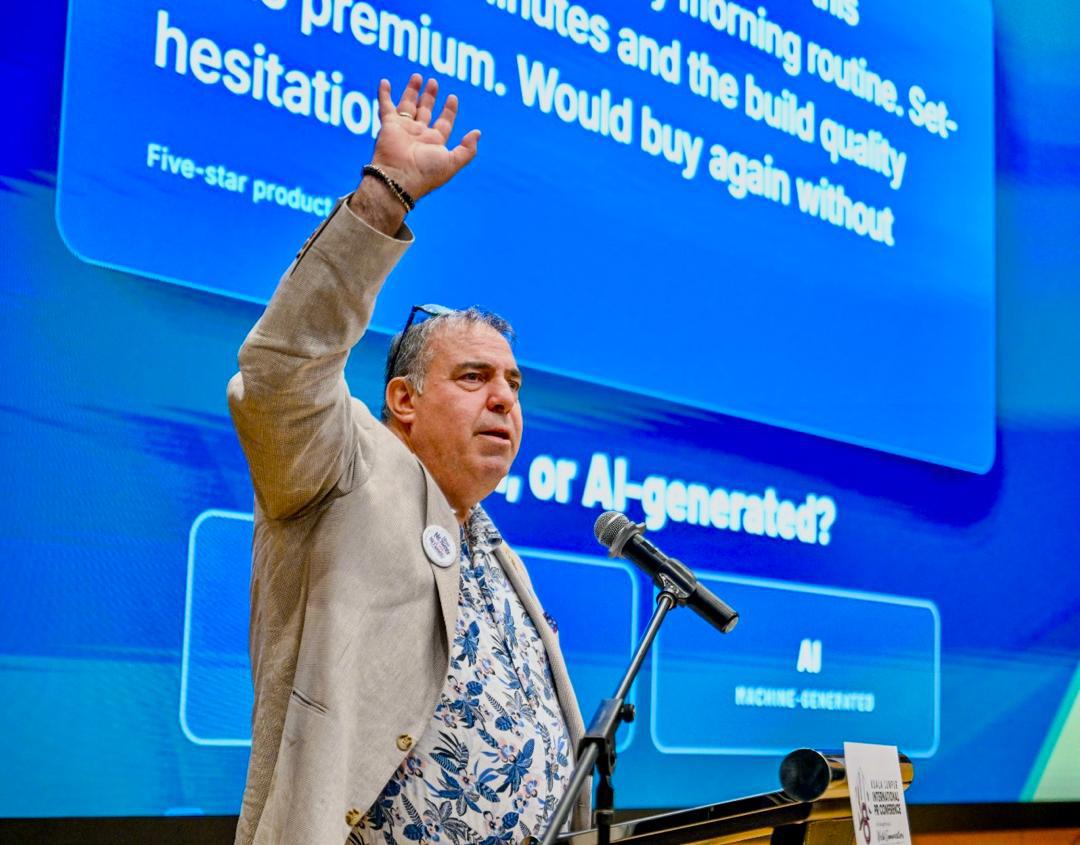
On stage for “From Intangible to Impact”: can you still tell whether what you’re reading is human or AI-generated? That question sits at the heart of trust.
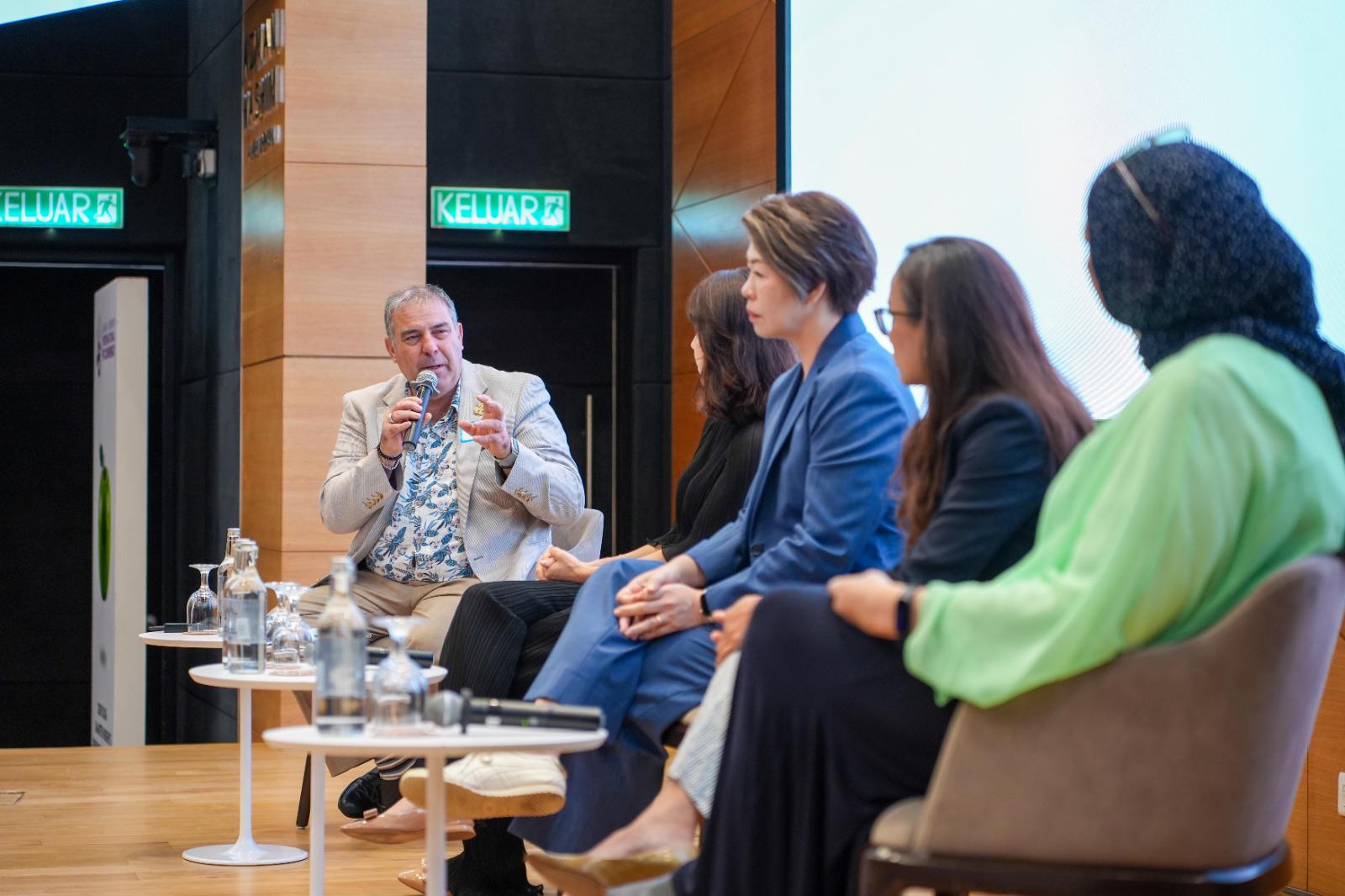
Facilitating the panel — when social media meets artificial intelligence, and the new playbook it demands of communication leaders.
The sessions on Gen Z were a real wake-up call, and the paradox is what struck me. Here is a generation partly resisting AI — craving genuine, human interaction in a world of automated everything. And yet it is the very same generation using AI at speed to make decisions, and in many cases building entire businesses on the back of it. Both things are true at once. If we want to reach Gen Z, we can’t pick the truth that suits us and ignore the other. We have to hold both.
A woman of great influence
I want to single out Dr Prita Kemal Gani. As President of the ASEAN PR Network and founder of the LSPR Institute, she is one of the genuinely world-influencing communication leaders of our time — and a woman of enormous influence in this profession. Her session on how AI is redefining strategic communication in higher education was, for me, one of the quiet highlights of the day: a reminder that the future of our craft is being shaped in classrooms as much as in command centres, and that bridging academia and industry is how we lift the whole field. When Dr Prita speaks, the region listens. So do I.
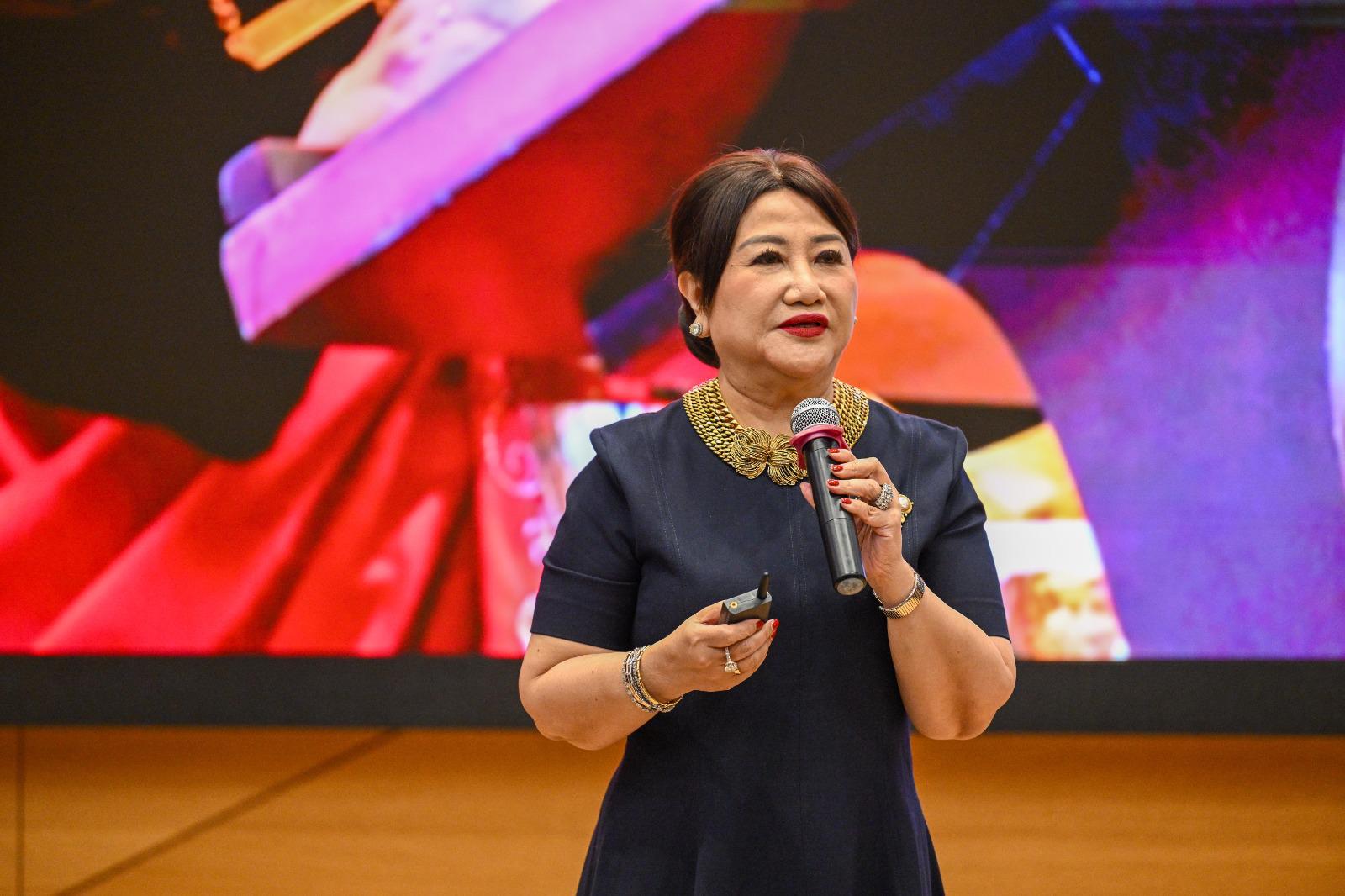
Dr Prita Kemal Gani in full flight — a world-influencing leader shaping the future of our profession, from the classroom to the boardroom.
And then, AI She Leads
Which brings me to the day after. KLIP 8 flowed straight into AI She Leads, and the timing could not have been more deliberate. Here is the thread I keep pulling on. The whole conference told us, again and again, that AI needs the human touch — that judgement, empathy and emotional intelligence are the things the machine cannot fake. Well, if the human touch is what saves us, then the people who have so often been our profession’s reservoir of emotional intelligence must be front and centre, not in a supporting role.
That is why women in communication taking the lead in the AI conversation is not a nice-to-have. It is strategic. The technology can model sentiment, but it cannot feel it. It can draft the words, but it cannot read the room. As AI takes over more of the mechanical, the distinctly human capabilities — emotional intelligence, ethical judgement, the ability to hold trust — become the profession’s competitive edge. AI She Leads put exactly the right people at the front of that shift, and I left more convinced than ever that this is where leadership in our field is heading.
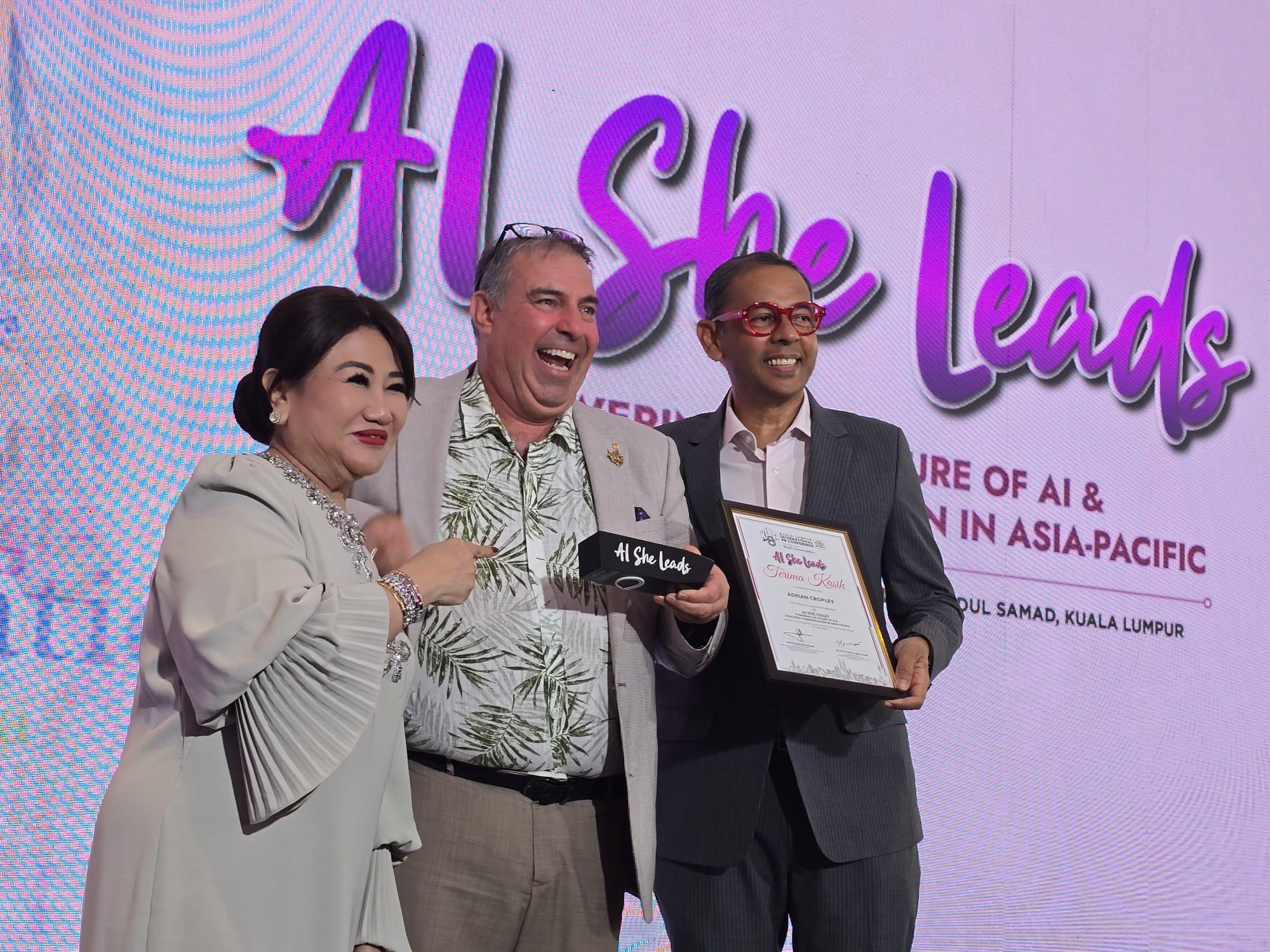
A humbling thank-you from Dr Prita Kemal Gani and Jaffri Amin at AI She Leads — the human touch, front and centre.
And here is the thread that ran from one day straight into the next. I both attended and presented at AI She Leads, and the central message carried over from KLIP without missing a beat: people, human judgement and moral decision-making have to be front and centre of how we lead our organisations. That is the job now. Not to hand the thinking to the machine, but to make sure a human stays in command of the decisions that carry a moral weight.
So where does that leave us?
Salesforce’s Rob Garf had a line that ran through KLIP and stuck with me: AI is not about displacing humans, it is about humanising the digital experience. That is the work. Not resisting the technology, and not surrendering to it — but governing it, with our values intact and our humanity in front. Read the principles. Sign the Venice Pledge. And then go and do the harder thing — live them in the everyday choices you make for your organisation and your audiences.
Zero Hour isn’t a moment of panic. It’s a starting line. That was the gift of KLIP 8 — it didn’t let us look away. Our job, as a profession, is to make sure that when the machines get loud, we are the ones people still trust to tell them the truth.
Any thoughts or opinions expressed are that of the authors and not of Global Alliance.